
Cigars are a type of tobacco product that are known for their rich flavors, complex aromas, and the leisurely ritual associated with smoking them. Here are some key aspects about cigars:
1. Tobacco Varieties: Cigars are made from tobacco leaves, and the flavor and characteristics of a cigar largely depend on the type of tobacco used. There are two main types of tobacco used in cigars:
- Wrapper Leaves: These are the outermost leaves of a cigar and are responsible for its appearance. They are often grown in regions with mild climates, such as Connecticut in the United States, and are prized for their smooth and delicate flavor.
- Filler Leaves: These are the inner leaves of a cigar and provide its core flavor. Different types of tobacco are blended to create a specific taste profile. For example, Cuban cigars are renowned for their rich and earthy flavors, while Dominican cigars are known for their mild and creamy characteristics.
2. Cigar Shapes and Sizes: Cigars come in a wide variety of shapes and sizes, which are often referred to as vitolas. Some common shapes include:
- Robusto: A short and thick cigar.
- Toro: A slightly longer and thicker cigar.
- Churchill: A long and slim cigar.
- Figurado: A uniquely shaped cigar, often with a tapered or irregular shape.
3. Hand-Rolled vs. Machine-Made: Cigars are typically either hand-rolled or machine-made. Hand-rolled cigars, often referred to as premium cigars, are crafted by skilled artisans who carefully select and blend the tobacco leaves. Machine-made cigars are mass-produced and tend to be less expensive.
4. Cigar Aging: Cigars can benefit from aging, which allows the flavors to mellow and mature. Many cigar enthusiasts store their cigars in humidors to maintain the ideal humidity and temperature conditions for aging.
5. Pairing with Beverages: Cigars are often enjoyed alongside various beverages, such as whiskey, bourbon, rum, wine, coffee, and even tea. The pairing can enhance the overall sensory experience.
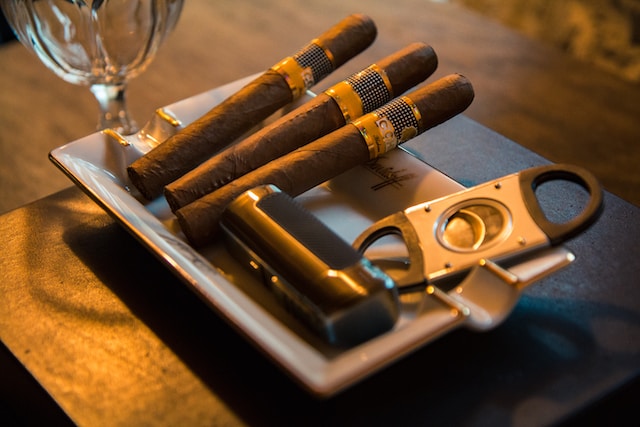
6. Cigar Smoking Ritual: Smoking a cigar is seen as a leisurely activity that encourages relaxation and socialization. The ritual of selecting, cutting, and lighting a cigar is an integral part of the experience for many aficionados.
7. Cigar Etiquette: There is a set of etiquette associated with cigar smoking, such as not inhaling the smoke into the lungs (unlike cigarettes), not tapping off the ash too frequently, and not rushing through a cigar.
8. Famous Cigar-Producing Regions: Some regions are renowned for their cigar production, including:
- Cuba: Known for its world-famous Cuban cigars, often considered among the best in the world.
- Dominican Republic: A major producer of premium cigars, offering a wide range of flavor profiles.
- Honduras: Gaining recognition for its strong and spicy cigars.
- Nicaragua: Known for producing robust and flavorful cigars with a variety of wrapper types.
9. Health Considerations: It’s important to note that cigar smoking is not risk-free and is associated with health risks, including an increased risk of oral, throat, and lung cancer. Cigar enthusiasts should smoke in moderation and be aware of the potential health consequences.
Cigar smoking is more than just a nicotine delivery method; it’s a hobby and a passion for many. It offers a unique and contemplative experience for those who appreciate the art and craftsmanship behind each cigar.
 Mission Gentlemen
Leave a comment